
Know what to do about your pay gaps.
Bridgit Pay is software for pay gap reporting and EU pay transparency, helping you to report, explain, and act on what you find.
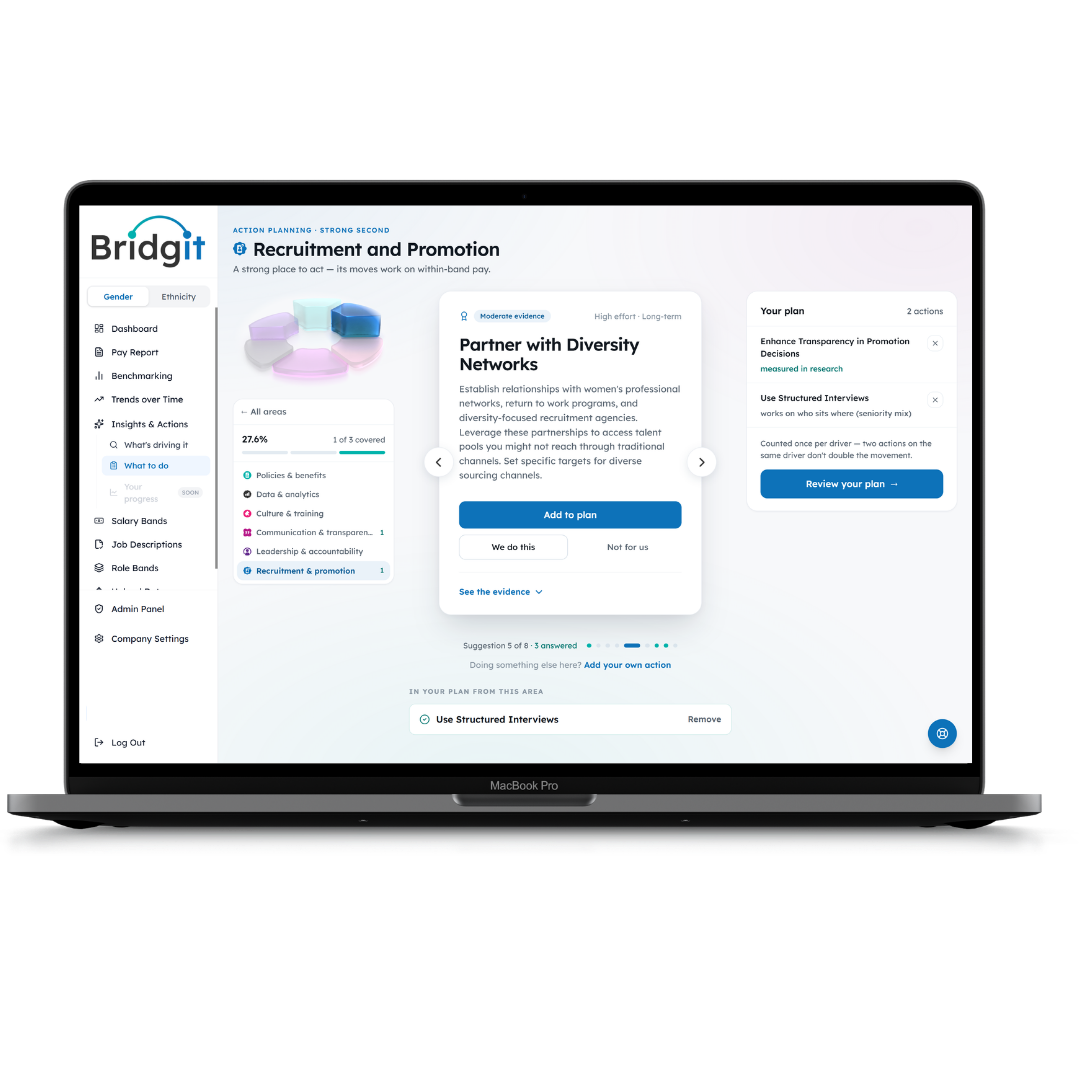
Bridgit exists to create greater equity in pay.
We take on the reporting and show you why your gap exists so you know where to focus. Choose from evidence-based actions to create a plan of accountability, moving from an annual report to continuous progress.
Products
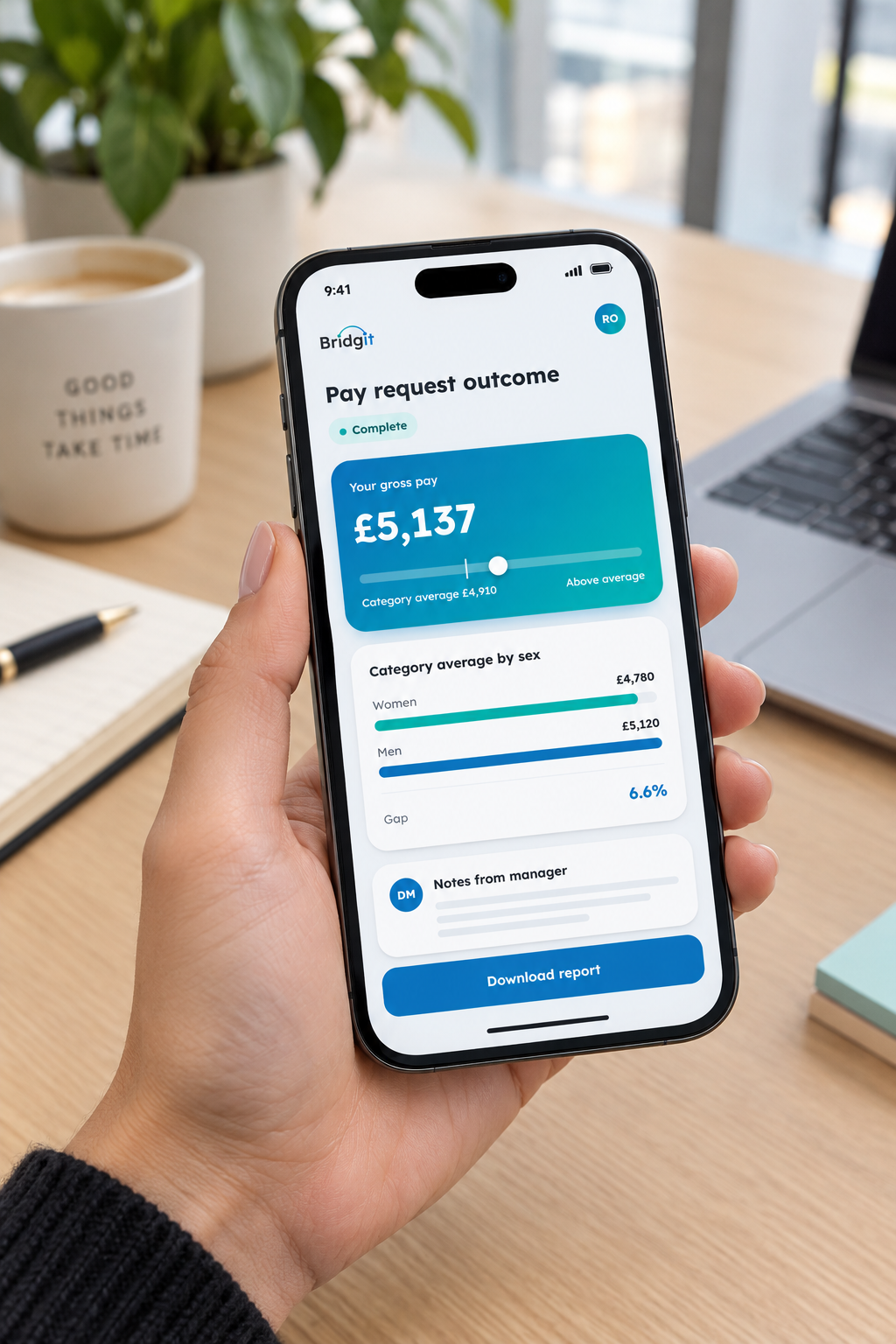
Pay transparency reporting
Report pay gaps by category of worker and answer employee pay requests. We track the legislation so you don’t have to, meaning you’ll feel confident in your preparation.
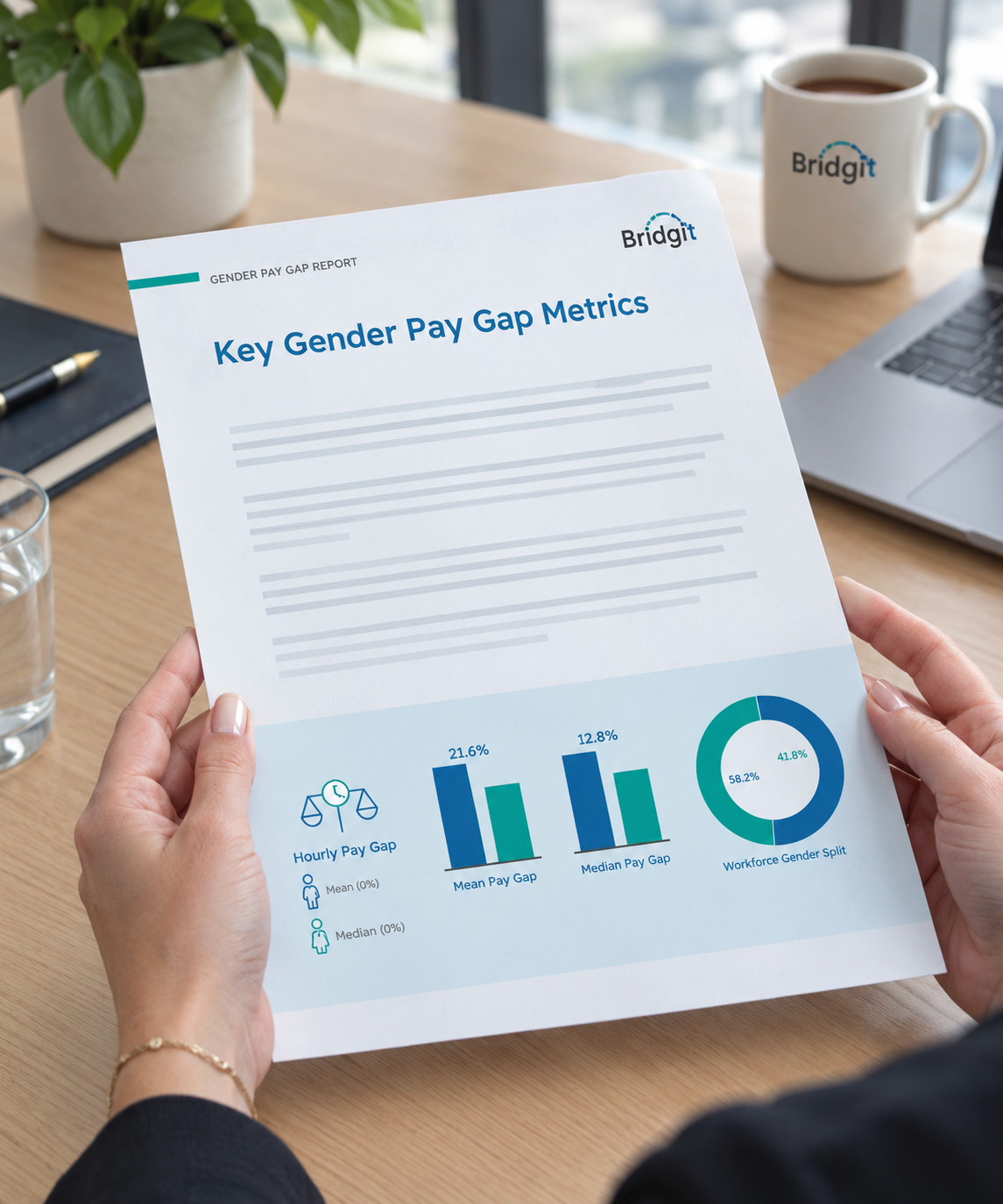
Pay gap reporting
Less time cleaning data, more time understanding it. See where your gaps are hiding and give every action an owner so reporting can lead to real change.
Why Bridgit?
Software built by psychologists and HR specialists.
Live in days
Our AI data wizard cleans your data, dramatically reducing data preparation time.
Answers why
See what drives your pay gap so you can explain it to the board and know where to act.

Built for change
Every action has an owner who gets reminded, so progress continues after publication.

Shaped by you
Don’t wait for customisations. Your feedback shapes new features, released weekly.
Process
How it works
-
Upload your payroll export and our AI maps and cleans it for you. If you want it fully hands-off you can connect your HR system or set up automated SFTP.
-
See your pay gaps in seconds, organisation-wide or by category of workers, with a plain-language narrative that explains what the numbers mean. Publish straight into a pre-designed template. No copying figures across, no excessive rounds of edits with comms and design.
-
Your pay gap story shows the biggest drivers, separating the effect of representation from pay differences within groups. Drill down to employee ID level to compare pay with similar colleagues, controlling for factors like department, length of service and age. See which gaps are explained by objective factors, and which unexplained gaps could trigger a joint pay assessment under the 5% rule.
-
Turn insight into an auditable plan of the actions you’ll take, with owners and reminders that keep delivery on track. Close your gaps, strengthen your reputation as an employer, and show you’re meeting your obligations, from the UK’s upcoming mandatory action plans to EU joint pay assessments.
What clients say



FAQs
-
Directive (EU) 2023/970 requires employers with 150 or more staff to report gender pay gaps, including by category of worker. First reports are due by 7 June 2027, covering 2026 pay. Employees can ask about pay at any time and must get an answer within two months. Bridgit applies these rules to your data, so you know where you stand before you publish.
-
For one country with simple pay structures, possibly. For most organisations, it becomes a new system to build and run. The rules are still changing, and each country adds its own. Employee pay requests arrive all year, each with a two-month deadline. Every gap of 5% or more needs a reason on record or a fix. Bridgit surfaces those gaps and manages requests for you, which takes that manual work off your team.
-
AI tools give fast answers, but payroll data is sensitive personal data, and uploading it to a public tool is a GDPR risk. The guidance also involves judgement calls, such as which bonus period counts, and a wrong figure sounds as confident as a right one. Bridgit’s calculations follow the legislation, so you can explain every figure if it’s questioned.
-
Yes. Anyone can upload a simple template. Employers with 250 or more staff can also connect Bridgit to platforms like Workday, SAP SuccessFactors or HiBob. Furthermore, you can add your own branding to the employee request portal so staff ask about pay in an environment that feels like their organisation. Your first report covers 2026 pay, so there’s no need to wait for your HR platform to catch up.
-
Several countries, including Ireland, missed the 7 June 2026 deadline for national law. The Directive still sets the reporting dates, and grouping roles and cleaning data take months. Starting on the EU baseline means you’re ready when your national rules arrive.
-
Yes. Your data is stored and processed in the UK and EU, encrypted in transit (TLS 1.3) and at rest (AES-256), on infrastructure certified to ISO 27001 and SOC 2 Type 2. Employee records are pseudonymised and access is protected by multi-factor authentication. Our AI works from aggregated figures only and your data is never used to train models. We’re registered with the ICO, and our full sub-processor list is in our Privacy Notice.
Less time on reporting. More time for change