

Automate pay transparency
Complete the heavy-lifting for the EU Pay Transparency Directive in days - not months - with Bridgit’s intelligent software. Built specifically for EUPTD requirements, not a bolt-on.
Mapping
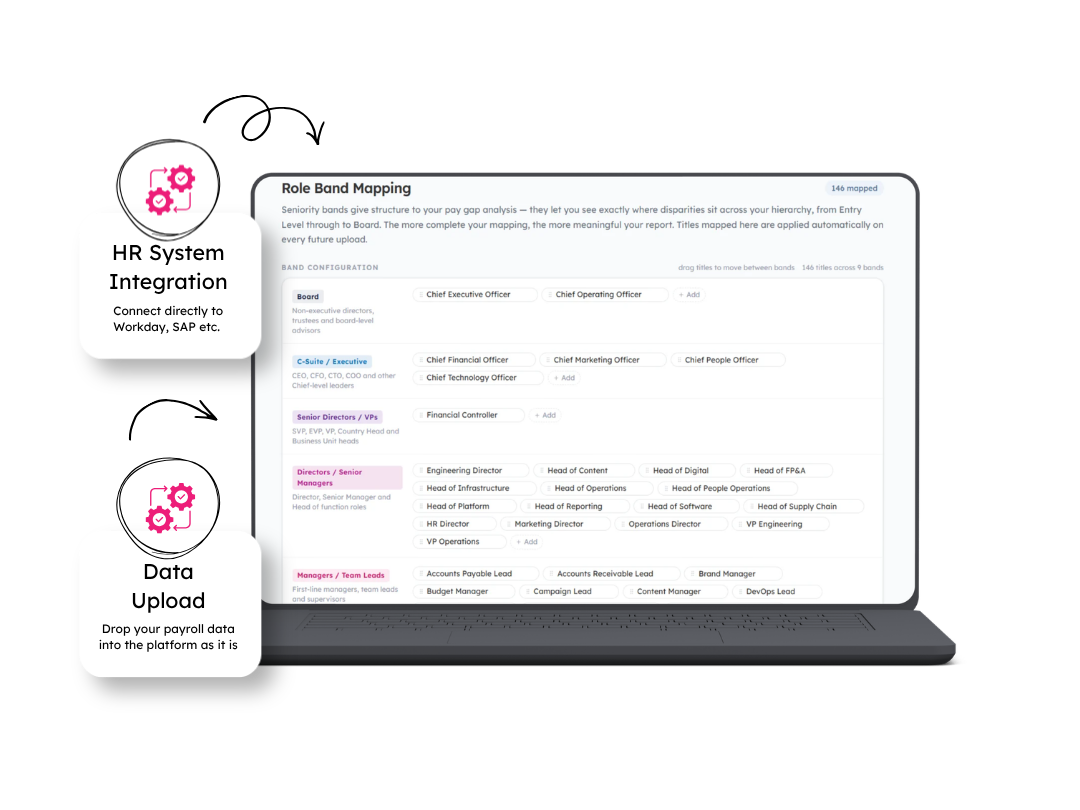
Automate job classification for pay band analysis
No job evaluation from scratch. Bridgit reads your existing job titles and automatically sorts people into comparable work categories - the critical first step for EUPTD compliance.

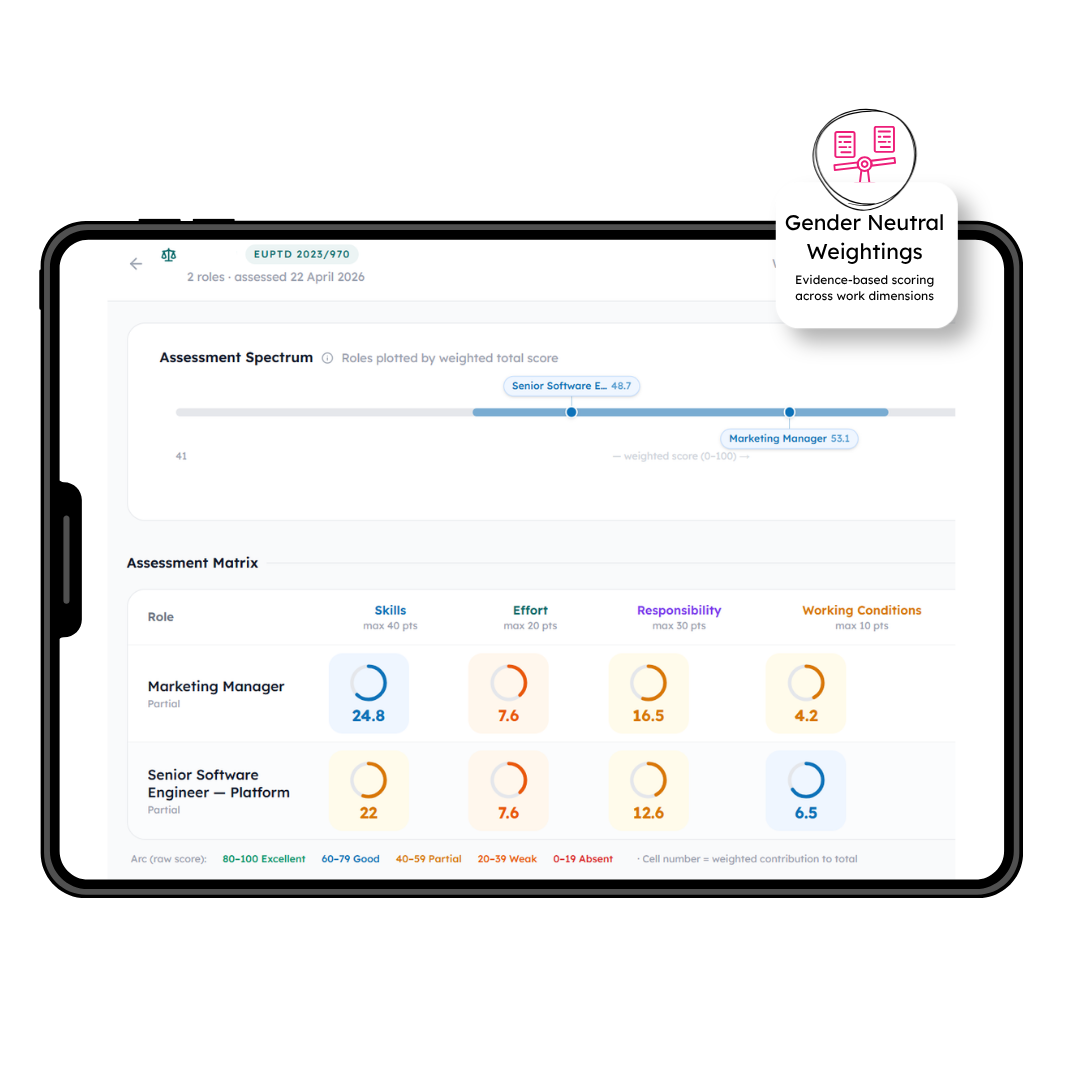
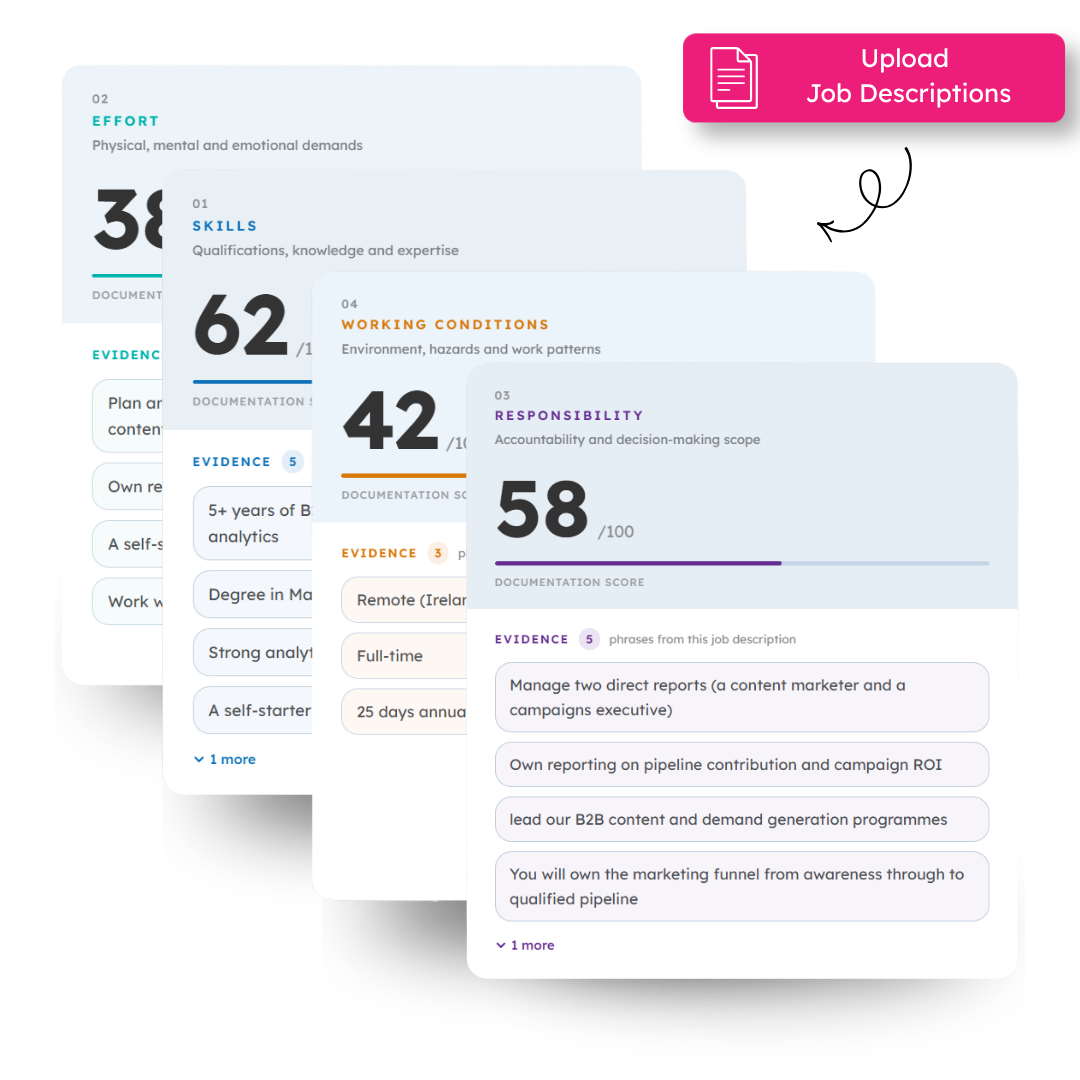
Evaluate work of equal value with EUPTD-certified methodology
Upload your existing documentation. Bridgit assesses it across objective dimensions: skills, effort, responsibility, and working conditions. The result? Transparent, evidence-based job bands that hold up under scrutiny.
Insight
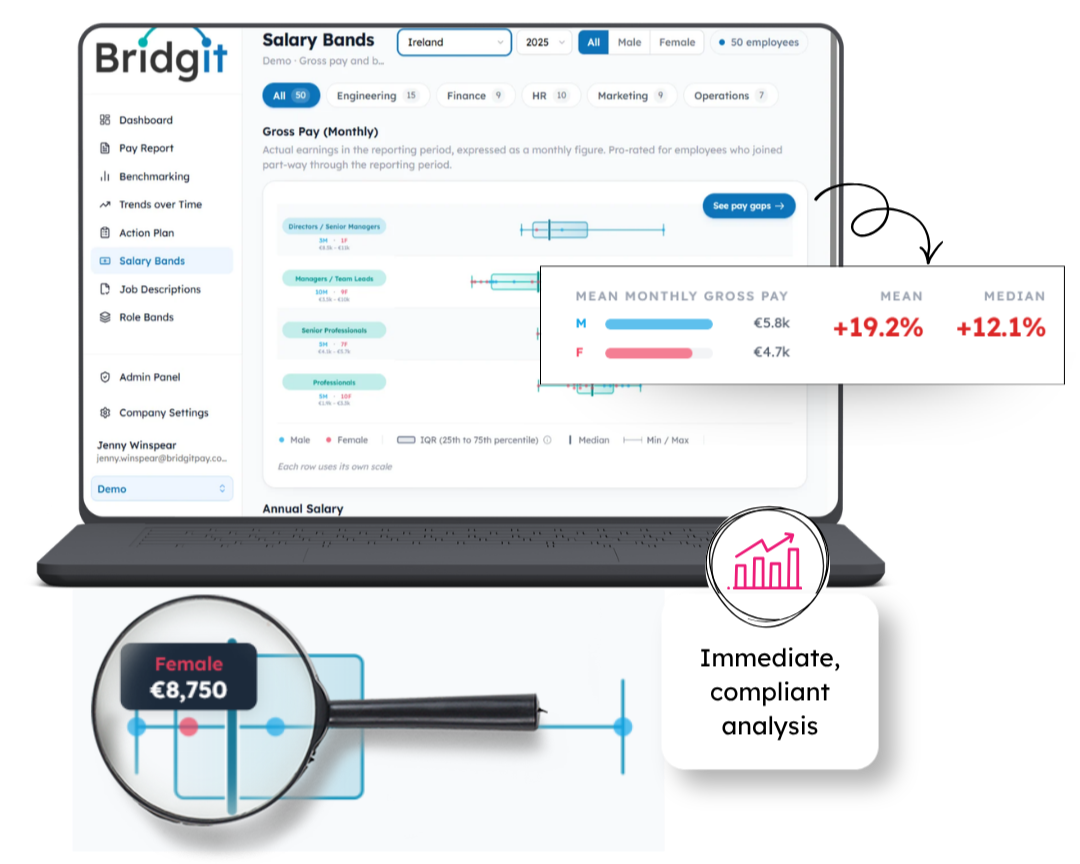
Visualise your pay bands and gaps
Review decisions and processes through a transparency lens.
See your pay landscape by role and gender. Bridgit flags where gaps exceed 5%: the threshold that triggers action under EUPTD. No surprises in your 2027 report.
Dialogue
Centralise employee information requests
EUPTD Article 7 gives every employee the right to request their pay data, broken down by gender for their work category. Bridgit's self-service portal lets them request and generates a compliant, personalised report automatically. HR closes the loop without manual work.